
Why Cats Always Land on Their Feet

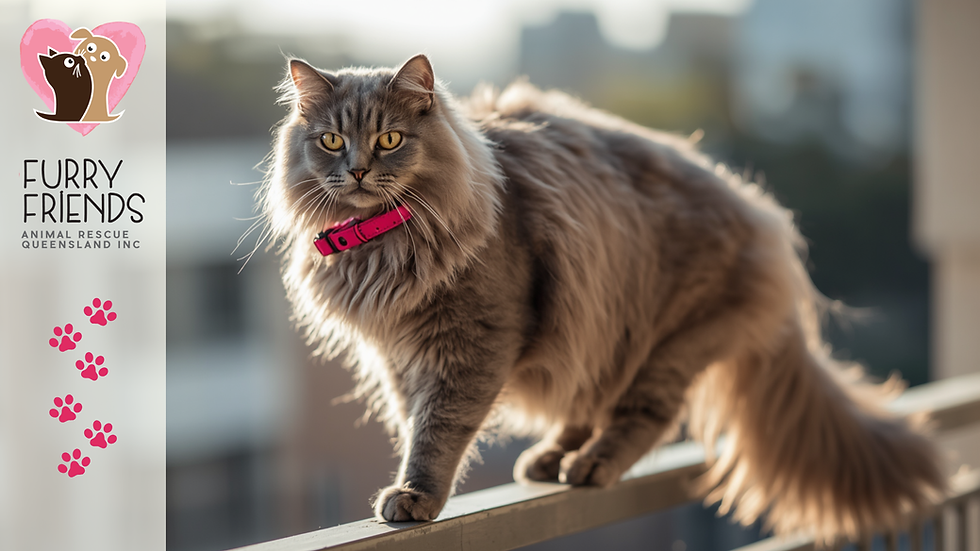
The science behind their amazing agility
Drop a toast and it lands butter-side down. Drop a cat, and it somehow performs a mid-air gymnastics routine, sticks the landing, and looks mildly offended that gravity even tried.
The famous idea that cats always land on their feet is based on a real biological trick called the righting reflex. It is fast, elegant, and just a little bit ridiculous. Cats combine sharp senses, a flexible spine, loose shoulders, strong balance systems, and lightning-quick body control to twist themselves upright while falling.
They are not magical. They are physics with whiskers. In this week's blog we explore the amazing balance our furry friends possess.
The righting reflex starts with the inner ear
A cat does not need to look down, check a map, or consult a tiny feline flight manual. Its body can sense orientation almost instantly.
The key is the vestibular system, a balance system inside the inner ear. This system detects the position and movement of the head. When a falling cat tips out of alignment, the inner ear sends rapid signals to the brain, which then tells the body, “We are upside down. Fix this before dignity is lost.”
The righting reflex usually develops when kittens are a few weeks old. Very young kittens are still clumsy little potatoes with paws, but as their nervous system matures, the reflex kicks in. Soon enough, they begin practising the ancient art of “I meant to do that.”
Here is the basic sequence:
The cat senses which way is up.
It turns its head to face the ground.
The front half of the body twists to follow the head.
The back half rotates next.
The legs extend, preparing for impact.
This all happens in a fraction of a second. To human eyes, it looks like a furry magic trick. To the cat, it is Tuesday.
A cat’s skeleton is built for twisting
The righting reflex would not work nearly as well without the cat’s unusual body structure. Cats are wonderfully bendy, as anyone who has found one sleeping inside a laundry basket, shoe box, or saucepan can confirm.
Their spine is highly flexible, with more twisting ability than the human spine. This lets the front and back halves of the body rotate in different directions. When a cat falls, it can twist its front half one way and its rear half another way, without needing to push against anything in mid-air.
That last part is the clever bit. A falling cat has no wall, floor, or unsuspecting houseplant to push off. Instead, it changes the shape of its body to control rotation.
Cats also have free-floating collarbones, or clavicles, that are not strongly attached to other bones the way ours are. This gives their shoulders a larger range of movement. It helps them squeeze through narrow spaces and land with front legs ready, although it also explains why a cat can fit through a gap that appears to violate basic geometry.

Physics helps, but cats still do the hard work
The cat’s mid-air twist is a classic example of angular momentum. Do not panic. No one is asking you to relive school physics with a cat judging your notes.
When the cat pulls in its front legs and stretches out its back legs, it changes how quickly different parts of the body rotate. Then it reverses the pattern. By changing body shape, it can turn itself without breaking the rules of physics.
Think of a figure skater spinning faster when pulling their arms in. Cats do something similar, except they do it while falling off a bookshelf after making poor life choices.
Once upright, the cat spreads its legs slightly. This increases air resistance and helps slow the fall a little. The arched back and loose limbs also help absorb impact. Cats often land with bent legs, which act like springs.
Still, this is not a superhero power. Cats can get injured in falls, including falls from high places or awkward heights. The phrase “always land on their feet” is a bit too confident. Cats are excellent at correcting their position, but they are not immune to gravity. Gravity remains undefeated.
Whiskers, tails, and paws all join the balancing act
A cat’s agility is not just about falling. It begins every time a cat walks along a fence, leaps onto a kitchen bench, or steps around a full cup of water with the casual menace of a tiny chaos engineer.
Whiskers help cats detect nearby objects and air movement. They are sensitive touch tools, not decorative face antennae, although they do make cats look like distinguished professors.
Paws also play a role. Cats have soft pads that give grip, cushion landings, and provide sensory feedback. Their claws can extend when needed, helping them grip surfaces during climbing or quick turns.
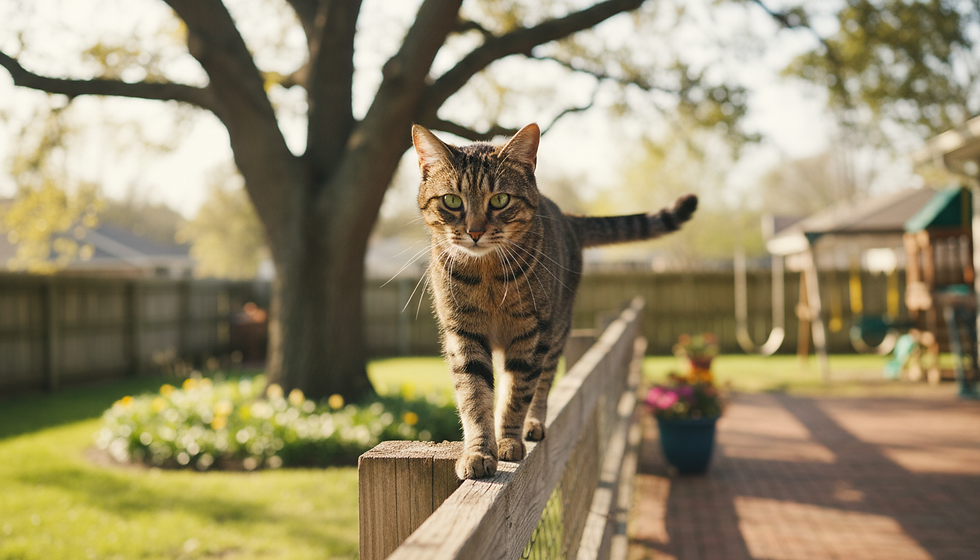
And then there is the tail. A cat’s tail helps with balance, especially when making sharp movements or walking along narrow surfaces. It works a bit like a counterweight. If the body shifts one way, the tail can swing the other way to help stabilise the cat.
This is why a cat can patrol the back fence with the confidence of a tightrope walker, then miss a jump onto the sofa by two centimetres and pretend the sofa moved.
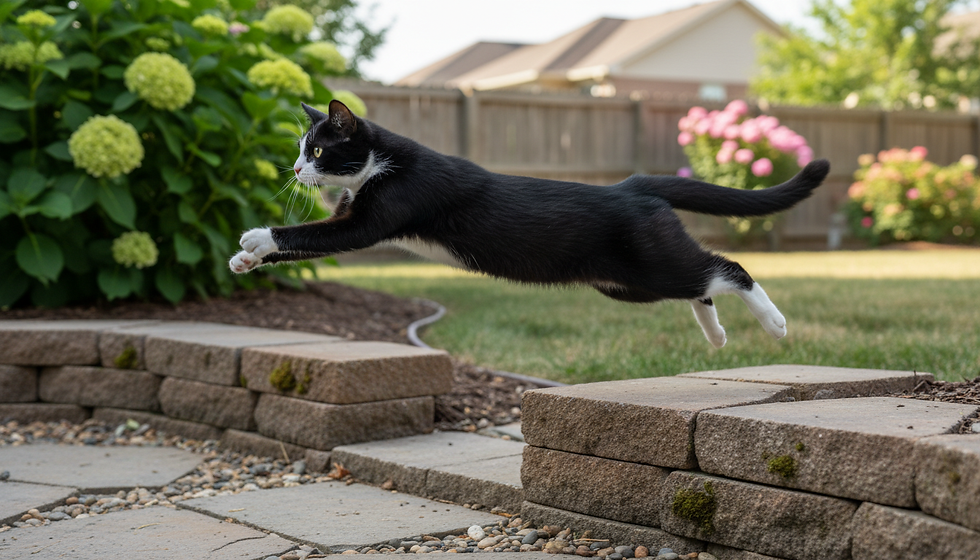
Cats in action are tiny athletes with bad excuses
Anyone who has lived with a cat has seen the righting reflex in less dramatic forms. A cat rolls off a cushion while sleeping, twists mid-drop, lands on all fours, then immediately washes one shoulder as if hygiene was the plan all along.
Or consider the classic curtain-climbing kitten. It scrambles upward with heroic confidence, realises the ceiling offers no career pathway, lets go, rotates, lands, and sprints away as though late for a very important meeting under the bed.
Cats also use their agility when hunting. Even well-fed house cats may pounce on toys, moths, shadows, or your ankle at 5 am. Their bodies are built for sudden bursts, precise leaps, and quick landings. Flexible backs allow long strides. Powerful hind legs launch them forward. Sharp reflexes help them adjust mid-pounce when the “prey” turns out to be a dust bunny.
Cats do not defeat gravity. They negotiate with it quickly, elegantly, and with excellent facial expressions.
The takeaway is part science, part fur-covered drama
Cats land on their feet because their bodies are brilliantly designed for balance and rotation. The inner ear tells them where they are in space. The brain triggers the righting reflex. The flexible spine, loose shoulders, strong legs, sensitive paws, whiskers, and tail all help complete the move.
That does not mean cats are indestructible. Windows, balconies, trees, and high shelves can still be dangerous. Keeping screens secure, supervising balcony time, and offering safe climbing furniture lets cats enjoy their athletic side without turning the lounge room into an extreme sports venue.

So the next time a cat twists through the air and lands as if choreographed, admire the science. Then admire the attitude. Because no matter how clever the righting reflex is, the cat will still act like it invented physics.
🐾
If you are interested in adopting a Furry Friend you can view our Adoptables here
If you are interested in Fostering a Furry Friend, please visit this page on our Website for more information, and complete the Foster Application Form.
If you cannot Foster but would like to help, you can Buy Supplies for Us
or just give a Donation.


